
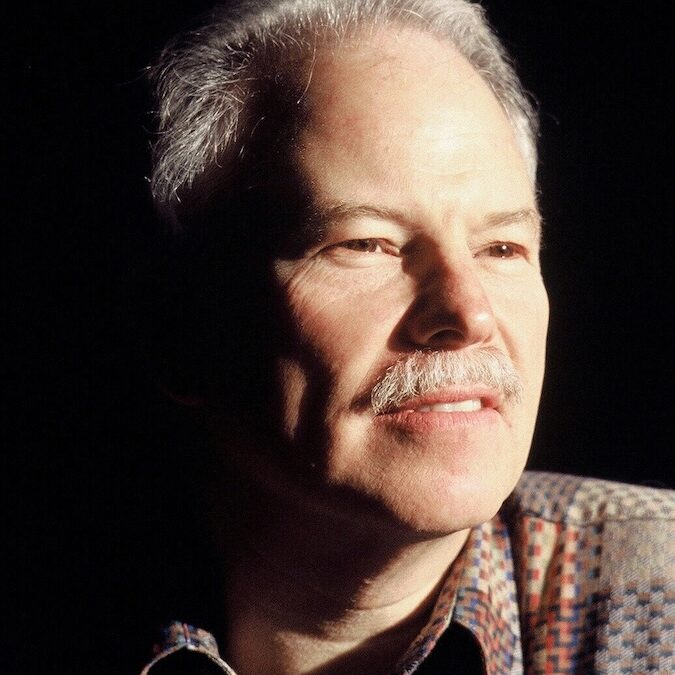
Dear Friends,
I have two things to report to you today:
News. . .
A while back I asked David Miller, our Chair of Programming, to lead a search committee to seek out NEPC’s next vice president. We’d been without someone in that position since June, and I fear that we’ve been overtaxing our existing leadership. That group recently finished their deliberations and ended up unanimously approving one candidate. David brought that name to last Saturday’s board meeting. At that time, members of the Board and Advisory Board were also able to meet and interview this individual. It speaks well of our candidate that we, too, were unanimous in our approval. So I am happy to announce that our new Vice President is Kevin D. Vallejo. In one regard, Kevin is a surprising choice since he only moved to our area from Idaho a little less than a year ago. But we were all impressed by how quickly he and his wife have become active in the literary scene, meeting other poets and attending open mics. He came to my attention after one of my open calls for volunteers––and I can tell you exactly why he earned my vote.
Kevin’s paid profession is as a scientist for Lila Sciences, a local startup founded by MIT professors. He has a Ph.D. in materials science and engineering. Active in the national organization Poets for Science, begun by Jane Hirshfield, Kevin has a strong commitment to bridging those two bodies of knowledge (especially since both seem under siege of late from certain quarters). He contacted me about creating a reading or workshop focused on the subject, and we’ve begun to explore just that. But I asked whether he’d also volunteer for a task that did not make use of either his poetry nor physics backgrounds––and, without hesitation, he said yes. That’s how Kevin and his wife, Kate, ended up purchasing and serving all the refreshments at the Longfellow House reception at our Golden Rose reading in August. (I’m sure some of you were handed drinks by them, accompanied by welcoming smiles.) A willingness to be of use: the true sign of a generous soul. Subsequently, the more I spoke with him, the more I hoped he might want to contribute to our organization.
Kevin is the author of one full-length collection (Energy and Nothingness, published by The Poetry Box) featuring poems about quantum mechanics, and also a chapbook entitled minus one twelfth: or the occasional sum total of love. Kevin also serves on the editorial board of Consilience journal, one of the premier forums exploring the intersection of poetry and science. While Kevin is clearly an individual with a lot on his plate, his energy seems boundless. We are delighted to welcome him into NEPC leadership and look forward to the new projects he is bound to champion.
. . .and: news that remains news
As I’m sure many of you know, one of my other hats is that of founder of The Red Letters, a project publishing a weekly poem and commentary since 2020, back when I was Arlington’s Laureate. If you are a subscriber, you noticed that I took a three-week sabbatical recently. Some readers even wrote in, fearing I might be ill or exhausted––but the truth was much more bountiful: after a year of planning, my wife and I took a 24-day trip to Japan. Much of our visit (much more, I’m sure, than my wife expected) was centered around following in the footsteps of the great haiku poet, Matsuo Bashō. In late spring 1689, the 46-year-old embarked on his fifth and final pilgrimage around his homeland. Writing in the haibun form (prose passages punctuated with poems), the journal he kept would become his masterwork, The Narrow Road to the Deep North. Last week, I wrote briefly about this experience for the Letters but plan on much more extensive writing about what I experienced.
But I’d like to tell you about one place we visited on the outskirts of Kyoto: an ancient Buddhist temple called Konpukuji, founded in 864 CE. In Tokyo, the famous Bashō-an (thatched hut) where his signature ‘frog’ haiku was written has long been replaced by a Shinto shrine (though one honoring the poet). But halfway up the hillside above this out-of-the-way temple is yet another Bashō-an. This came about because Bashō developed a deep friendship with Tesshu, the priest who revitalized the temple during the Edo period; he allowed the poet to spend long stretches living in this quiet spot. After Bashō’s death in Osaka, the Konpukuji cottage fell into disrepair. But decades later, one of the haiku master’s disciples, Buson, saw to it that the Bashō-an was restored––and it has been maintained ever since. Climbing a little further up the hill, I found Buson’s own tombstone, surrounded by markers for dozens of other haiku poets, scattered across the wooded slope. They, too, chose to make that sacred land their final resting spot.
Too often, we regard monumental literary titans as if they were gods. But it was so revitalizing to catch glimpse after glimpse of Bashō the man, the itinerant poet, trying his best to remain present to the ephemeral moments of his days. And doing just that, he left us well over 1,000 poems, plus five travel journals and numerous anthologies. We don’t know whether he understood he’d made an enduring contribution to, not only Japanese, but world literature––or even whether that would have been his concern. Yet knowing how much Bashō revered some of his literary forebears, I’m certain he would have recognized that all this was part of the inky brother-/sisterhood of which you and I are current members. His efforts were fueled by the very same longing that motivates most of us still, and spurs our poetry: to be more fully present within our own lives. I sat there as evening fell and felt a deep gratitude.
I am far too voluble to be a good haiku poet. But in the spirit of Bashō’s haibun, I’ll leave you with this, my own journal entry: Sitting here, it was easy to imagine Bashō descending the stone path toward the temple where he could smell the rice cooking and the saké warming. It was dusk now, and there was crow-laughter in tall pine, children playing in the street below. I remained until well after closing time and the temple’s kindly caretaker walked me to the gate. But thinking about our long tradition, I penned this little poem in my notebook:
At the temple well,
the long-stemmed bamboo cup,
still wet at the lip.
With my warm regards,
Steven
– President, NEPC