
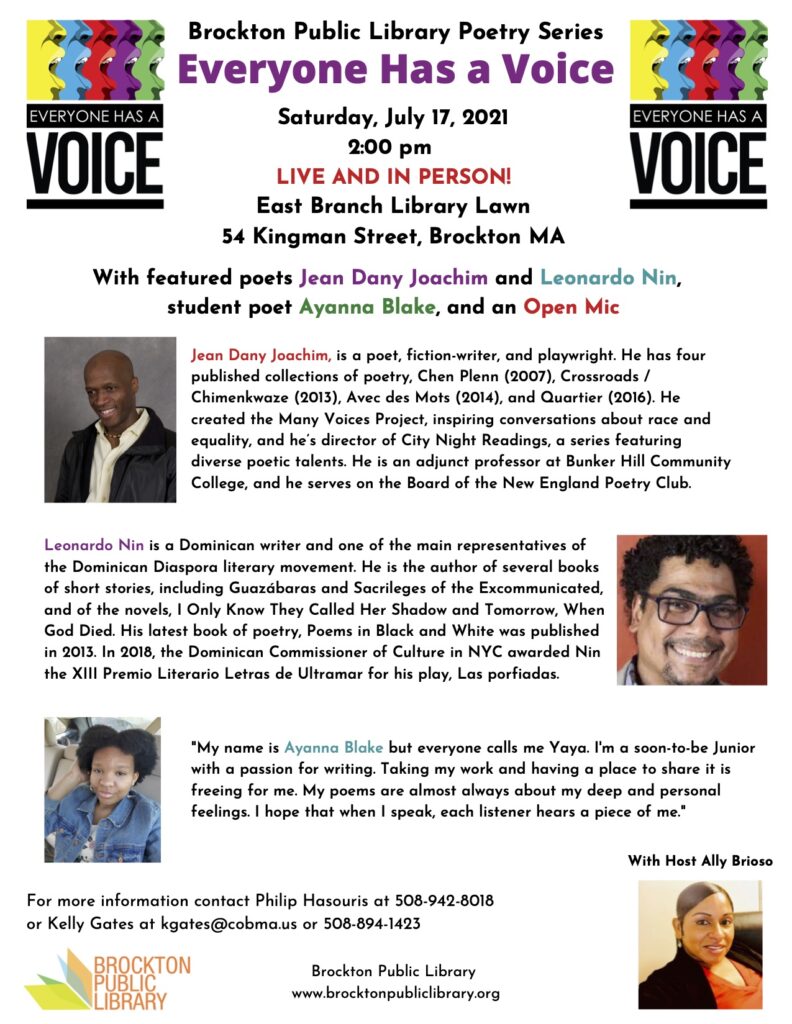
Mark your calendars! Brockton Public Library Poetry Series Everyone Has a Voice Saturday, July 17, 2021 2:00 pm LIVE AND IN PERSON!
Mark your calendars! This will be GOOD!
Brockton Public Library Poetry Series
Everyone Has a Voice
Saturday, July 17, 2021 2:00 pm
LIVE AND IN PERSON!
East Branch Library Lawn
54 Kingman Street, Brockton MA
With featured poets Jean Dany Joachim and Leonardo Nin, student poet Ayanna Blake, and an Open Mic
Join us for the 11th Annual Boston JUNETEENTH Emancipation Observance!
NEPC Advisory Member Denise Washington is one of the presenters!
Register for the Zoom link and find more information here

NEPC poet and board member Wendy Drexler is reading with NEPC poet (and award winner!) José Edmundo Ocampo Reyes on Thursday, June 17, 7 pm!
Rozzie Reads Poetry and Open Mic
Thursday, June 17th, 2021, 7 pm on Zoom
Sponsored by Friends of the Roslindale LibraryFeatured Poets
Born and raised in the Philippines, José Edmundo Ocampo Reyes is the author of Present Values, winner of the Jean Pedrick Chapbook Award from the New England Poetry Club. His poems have appeared most recently in Scoundrel Time, Solstice, and Memorious; and have been anthologized in The Powow River Anthology (Volumes I and II), Villanelles, and The Achieve Of, The Mastery: Filipino Poetry and Verse from English, mid-‘90s to 2016.
Wendy Drexler’s third poetry collection, Before There Was Before, was published by Iris Press in 2017. Her poems have appeared in Barrow Street, J Journal, Lily Poetry Review, Nimrod, Pangyrus, Prairie Schooner, Salamander, South Florida Poetry Review, among others. Her work has been featured on Verse Daily and WBUR’s Cognoscenti, and in numerous anthologies. She is poet in residence at New Mission High School in Hyde Park, MA, and is programming co-chair for the New England Poetry Club.
To sign up for this Zoom reading, contact hguran@aol.comand let me know if you want to read in the open microphone
Friends of Roslindale Branch Library
www.friendsofroslindalelibrary
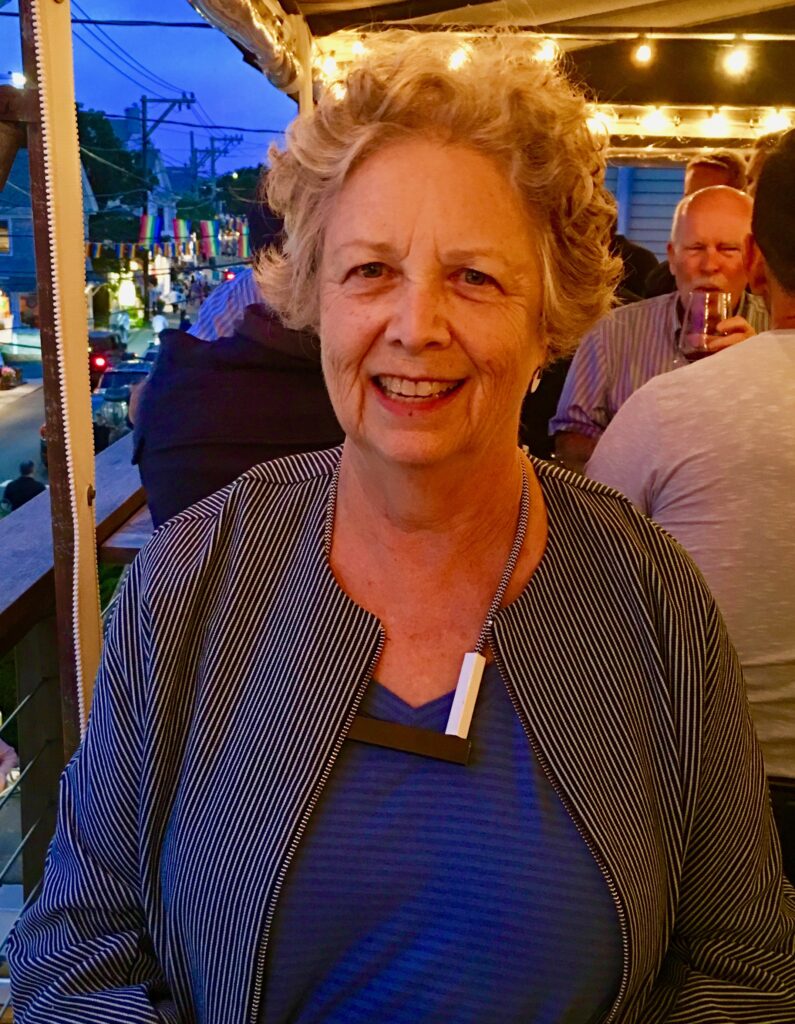
Congratulations to NEPC poet and board member Jennifer Markell on her new book!
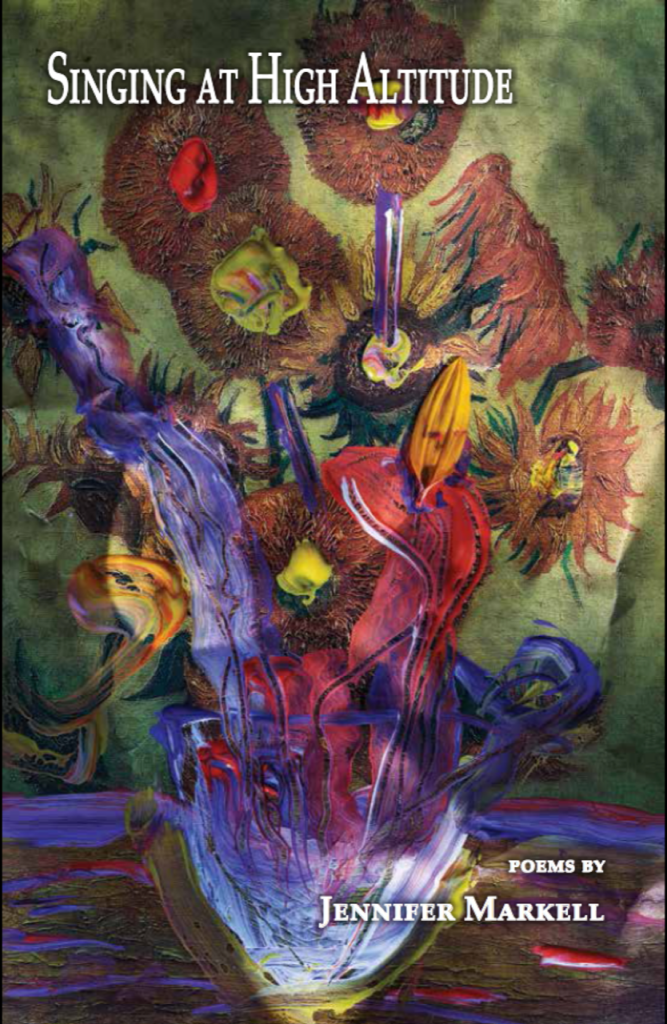
Jennifer Markell‘s first poetry collection, Samsara, (Turning Point, 2014) was named a “Must Read Book of Poetry” by the Massachusetts Book Awards, 2015. Her work has appeared in publications including The Bitter Oleander, The Cimarron Review, Consequence Magazine, RHINO, Tinderbox Poetry Journal, and The Women’s Review of Books. For the past twenty years Jennifer has worked in community mental health and as a psychotherapist. She lives with her husband and two well-versed cats. Singing at High Altitude (available for pre-order from The Main Street Rag) is her second book of poetry.
“The high-altitude singing in Jennifer Markell’s poetry comes not only from birds on the wing. In these poems we hear dreams and longings, odes and elegies, love-songs and laments. We hear also of piercing childhood memories, harsh societal bewilderments, and dire ecological warnings. These beautifully crafted and deeply moving poems are the songs of ongoing life on this earth, and they rise as high as we allow our imaginations to take them.”–Fred Marchant, Author of Said Not Said (Graywolf Press)
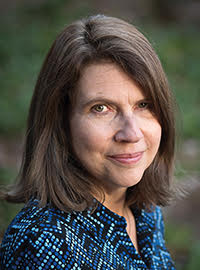
Congratulations to NEPC poet Cindy Frenkel on the publication of her book!
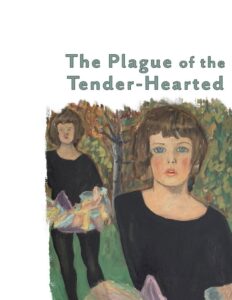
In The Plague of the Tender-Hearted, Cindy Frenkel makes her way through the maze of family death, divorce, even a brother’s suicide without ever losing the ability to embrace joys small and large. Despite heart-rending troubles there is still beauty in the natural world, the discovery of an unlikely new love, and moments with a beloved daughter when night “stars spill out, / enough to occupy the universe.”
–Mary Jo Firth Gillett
With her three-part alchemy of plain speaking, suddenly perfect metaphors, and explosive, morally anchored last lines, Cindy Frenkel portrays a family in The Plague of the Tender- Hearted. From the witty to the elegiac, the poems quest for the why beneath a brother’s suicide and examine the underside of prosperity. But the marvels of this collection are the sassy buoyant poems of love for a daughter and unexpected love after divorce. Frenkel uses memory, the dynamics of ageing parents, and the legacy of the holocaust to pierce us with her bullseye poetic one-liners. The Plague of the Tender-Hearted, with its gem-like rhymes, is both an exploration and a revelation.
–Molly Peacock, author of The Analyst and Cornucopia: New & Selected Poems
Congratulations to NEPC poet Gregory Joseph Firlotte on the publication of his new book!
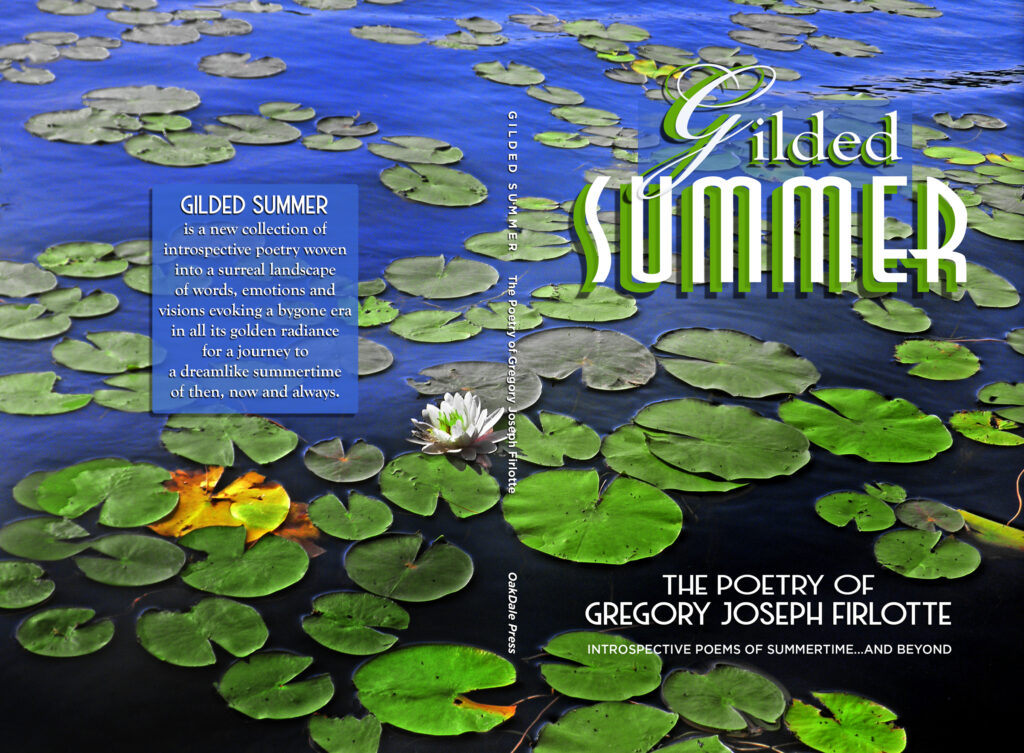
New book captures New England from another time
Like time travel to a bygone era, this second volume of poetry by Gregory Joseph Firlotte depicts summertime in subjects ranging from the natural world to inner worlds where love, hope and dreams reside — alluding to the sumptuous years of the Gilded Age leading into the twentieth century in often surreal and metaphysical landscapes crafted in words, emotions and visions. Throughout are vintage and contemporary black and white photographs that complement many of the poems, capturing the feeling, places and geography of New England environs which are integral components of Firlotte’s romantic style. The wraparound cover of drifting lily pads — a photo taken by the author on a July afternoon while canoeing on Cobbosseecontee Lake in Central Maine — inspired the book’s summertime theme.https://www.amazon.com/Gilded-Summer-Poetry-Gregory-Firlotte/dp/B0948JWX4V/ref=sr_1_2?dchild=1&keywords=firlotte&qid=1621056436&sr=8-2
Announcing a new book by NEPC poet Gloria Mindock!

In Gloria Mindock’s powerful new book, the flames of love die out and the ashes linger until they dissolve into air. The body is hostage, in charred relics of failed intimacies—The burnt-out ends of smoky days (T.S. Eliot). There’s beauty in the truth of Mindock’s words and images: Things got smokier, battling the embers with//false waters. And there’s hope: Not everyone believes in destruction.// All the heart wants is to beat. Above all, these poems radiate feeling, compassionately aware, attuned to a world of broken love that is burned beyond recognition, the ashes drifting and settling: how much sorrow can this heart take?// There is never an answer. Ash sears and sings.
-Dzvinia Orlowsky, author of Bad Harvest
Ash by Gloria Mindock (Glass Lyre Press, 2021, Glenview, IL) To order: www.glasslyrepress.com
New Poetry & Open Mic featuring Kathleen Aponick, Jeffrey Harrison, Ed Meek, May 9 @ 3:00 pm – 5:00 pm
New Poetry & Open Mic
Kathleen Aponick
Jeffrey Harrison
Ed Meek
Members will receive the zoom link information in a newsletter; please email info@nepoetryclub.org if you are not a member.
May 9, 2021 New Poetry & Open Mic readers
Kathleen Aponick, a native of Cambridge, is a former teacher and textbook editor. Her poems have appeared in such publications as Poetry East, Notre Dame Review, Poetry Ireland Review, Hollins Critic, and Paterson Literary Review. Her poetry collections include two chapbooks: Near the River’s Edge and The Port, as well as two full-length collections: Bright Realm, published by Turning Point Press in 2013 and a finalist in the New Rivers Poetry Prize at Minnesota State University, and The Descendant’s Notebook, published in 2020 by Kelsay Press. She lives with her husband, Tony, in Andover, Massachusetts.
Purchasing information: The best way to buy the book is to do a Google search for The Descendant’s Notebookto find the link that shows the book’s title with Kelsay Books, the publisher. It takes you right to the book. It is $16. If you order through Amazon, you pay $18.50.
Jeffrey Harrison’s sixth book of poetry, Between Lakes, was published by Four Way Books in September 2020. His previous books include Into Daylight, (Tupelo Press, 2014) winner the Dorset Prize, Incomplete Knowledge (Four Way, 2006), runner-up for the Poets’ Prize, Feeding the Fire, which won the Sheila Motton Award from the New England Poetry Club in 2002, and The Singing Underneath, selected by James Merrill for the National Poetry Series in 1987. He has received fellowships from the Guggenheim Foundation and the NEA, and his poems have appeared widely in magazines and anthologies, including Best American Poetry andthe Pushcart Prizevolumes, and been featured in American Life in Poetry, The Writer’s Almanac, Poetry Daily, and other online and media venues. More information can be found at jeffreyharrisonpoet.com.
Purchasing information: Here’s the link to the book’s web page at the publisher’s site, where it can be purchased: https://fourwaybooks.com/site/between-lakes-by-jeffrey-harrison/
Ed Meek writes poetry, fiction, articles and book reviews. He has had poems in The American Journal of Poetry, The Baltimore Review, The Sun, The Paris Review. He has had poems featured on NPR affiliates WBUR and WCAI. A collection of his short stories, Luck, came out in 2017. He has had stories in The North American Review, Hobart, Cream City Review, Adelaide. He has had articles in The Boston Globe Sunday Magazine, Cognoscenti, The Boston Review, Counterpunch. He writes book reviews for The Arts Fuse. His poem “In the Provinces” won an Honorable Mention in the National category of this year’s Outermost Poetry Contest. “It’s Not Always Easy” was just selected for the Boston Mayor’s Poetry Program and will be exhibited for the next year in City Hall. He is a volunteer Editor for Full House magazine. He tutors adults for the GED and teaches creative writing. His new book of poems, High Tide, came out last summer. https://www.edmeek.net @emeek
Purchasing information: https://aubadepublishing.com/books/high-tide/